Tuesday, June 03, 2025

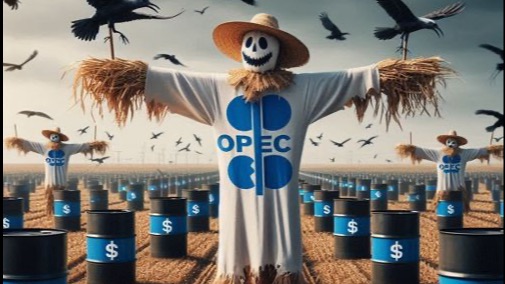
TARIFF UNCERTAINTIES AND OPEC+ KEEP THE MARKET ON EDGE


EXECUTIVE SUMMARY

TARIFF UNCERTAINTIES AND OPEC+ KEEP THE MARKET ON EDGE

The global oil market faces continued pressure from multiple fronts. Tariff negotiations between the U.S. and its trading partners have become increasingly complicated following a judicial decision challenging presidential authority to impose tariffs. Simultaneously, OPEC+ has maintained market uncertainty through surprising production announcements, adding 411,000 barrels per day to previous increases for April, May, and June.


These developments, along with geopolitical tensions in Ukraine and Libya and weather-related disruptions from Canadian forest fires affecting hydrocarbon production, have maintained the negative market sentiment established in previous weeks.


MARKET FUNDAMENTALS

Regulatory and Legal Developments

The U.S. International Trade Court in Manhattan has significantly impacted market dynamics by halting President Trump's global tariffs, including the "Liberation Day" tariffs announced April 2nd, ruling that presidential authority had been exceeded. This decision affects tariffs imposed on China, Mexico, and Canada designed to combat fentanyl trafficking. While the administration's immediate appeal temporarily suspended the ruling's effects, the case is expected to reach the Supreme Court, creating ongoing uncertainty.


The market reaction was immediate, with oil prices rising nearly $2/BBL on the news. However, this support proved temporary as other factors dominated trading sentiment.


Supply and Demand Dynamics


Inventory Movements: The Energy Information Administration (EIA) reported significant inventory drawdowns in its weekly Wednesday report, with commercial crude inventories declining 2.8 million barrels and gasoline stocks falling 2.4 million. These reductions occurred despite crude imports exceeding six million barrels and higher refinery utilization rates, indicating strong demand as the Memorial Day weekend marked the beginning of the peak driving season.

Production Activity: Low oil prices and approaching concerning levels have prompted U.S. oil companies to reassess investment programs. This is evidenced by declining drilling activity reported by Baker Hughes and reduced hydraulic fracturing crew deployment.

Demand Forecasts: Both the EIA and International Energy Agency (IEA) have revised demand growth projections downward for 2025 and 2026, forecasting growth below the historical two-decade average of 1.2 million barrels per day. The EIA projects global demand growth will not exceed one million barrels per day in the coming years, representing a less dramatic outlook than the IEA forecasts.


OPEC+ Strategy

OPEC+ continued its pattern of market intervention, having previously announced production increases exceeding 1.0 million barrels per day for April through June, then surprising markets with an additional 411,000 barrels per day increase for July. However, production increases may fall short of nominal targets as several member countries, including Kazakhstan, UAE, Iraq, and Russia, continue operating at or above capacity limits.


Saudi Arabia's willingness to operate with lower crude prices than budgeted is evidenced by Saudi Aramco's $5.0 billion conventional bond issuance and new sukuk bond program prospectus, which provide the company with flexibility to access debt markets through May 30, 2026.


GEOPOLITICAL ANALYSIS

Russia-Ukraine Conflict

Diplomatic efforts to resolve the Russia-Ukraine conflict face significant obstacles due to Vladimir Putin's negotiating inflexibility. Despite President Trump's apparent disappointment with Russian cooperation, particularly given that proposed terms (allowing Russian annexation of Crimea and eastern Ukrainian territories while preventing Ukrainian NATO membership) seemed favorable to Russian interests, progress remains stalled.

Trump has reportedly established a two-week deadline for Putin, threatening stronger responses to continued delays. Russian escalation of attacks on civilian targets during negotiations has generated adverse reactions from U.S. diplomacy. Putin's recent statements suggesting the USSR's continued legal existence, coupled with the appearance of Stalin statues in Moscow, indicate potential for additional hydrocarbon sanctions and military confrontation escalation.


Significant Development: Ukraine's June 1st drone attack on Russian airports, damaging at least 40 military aircraft from mobile bases within Russia, represents both material and propaganda victories with potential market implications.


Middle East Tensions

Israeli-Palestinian negotiations show mixed progress, with Israel reportedly approving U.S. envoy Steve Witkoff's plan while awaiting a formal Hamas response. Proposed terms include a two-phase hostage exchange (10 living hostages and 18 bodies for a 60-day ceasefire and Palestinian prisoner releases). However, Hamas officials indicate the proposal doesn't meet fundamental demands, including war termination.


Iran Nuclear Program: The International Atomic Energy Agency's comprehensive report confirms Iran conducted secret nuclear activities with undeclared materials at three locations. Saudi Arabia is reportedly pressuring Iran toward a U.S. atomic agreement to prevent facility attacks, emphasizing regional stability concerns.


Libya Political Instability

Eastern Libya's government threatens force majeure declarations for oil fields and ports, citing repeated attacks on the National Oil Corporation (NOC), which Tripoli's central government denies. While the eastern government lacks international recognition, military leader Khalifa Haftar controls most of Libya's critical oil infrastructure.


REGIONAL FOCUS: VENEZUELA

Political and Economic Landscape

Electoral Outcomes: Nicolás Maduro's PSUV achieved regional election objectives, securing governorship and National Assembly control while marginalizing opposition factions. However, low voter turnout and empty streets during elections demonstrate the disappearance of the once-vibrant "red tide," indicating democratic deterioration.

Constitutional reform postponement until next year suggests the regime's preference to avoid new conflicts during ongoing Washington-Miraflores negotiations.


Economic Implications: Continued Venezuelan repatriation flights and rumors of specific licenses for Chevron and other international operators indicate ongoing White House negotiations. The interpretation of "preserving" assets in potential licenses focuses on security and personnel maintenance rather than new investment to counteract field decline or mitigate falling international prices and export restrictions.


Limited license arrangements would restore pre-2022 conditions before General License 41 (GL-41), when passive international partner presence coincided with payment collection irregularities and reduced activity due to PDVSA's insufficient investment contributions.

Reduced foreign currency availability from hydrocarbon sales represents the economy's Gordian knot, with less transparent revenue channels than during the expired May licenses. Post-electoral public spending reductions and persecution of parallel market dollar rate publishers promote shortages and inflation acceleration.


Oil Operations

License Expiration Impact: All OFAC-granted licenses terminated at midnight May 27th, with final U.S.-bound crude shipments departing mid-May. Chevron concluded all General License 41 contracts for production, U.S. oil transportation, and Venezuelan diluent imports.

Operational Transition: Joint ventures now operate under PDVSA management per Organic Hydrocarbons Law requirements, with Chevron reverting to passive minority participation. Similar arrangements apply to Repsol and Maurel & Prom operations.

Pre-deadline crude sales utilized barter arrangements, importing substantial diluent volumes estimated to be sufficient for several months of upgrading and blending operations. However, based on experiences with three other Jose upgraders, analysts question PDVSA's ability to maintain PetroPiar upgrader operations.

Current Production Data:

  • Total Production: 844,000 barrels per day (Kbpd)
    • Western Region: 210 Kbpd
    • Eastern Region: 121 Kbpd
    • Orinoco Belt: 513 Kbpd

Refining Operations: National refineries processed 227 Kbpd of crude and intermediate products, with Cardón's catalytic cracking unit (FCC) maintaining operation. Production included 86 Kbpd of gasoline and 74 Kbpd of diesel.

Petrochemical Sector: Methanol plants operate at 88% capacity, while Fertinitro's ammonia and urea train has commenced operations in Jose.

Export Performance: May exports totaled 560 Kbpd (two days before month-end):

  • China (direct and via Malaysia): 400 Kbpd
  • Cuba: 90 Kbpd
  • United States: 70 Kbpd
  • Product exports (mainly residual fuel to Singapore, asphalt to the U.S.): 55 Kbpd

OTHER SIGNIFICANT DEVELOPMENTS

Corporate Actions

  • ExxonMobil-Chevron-Hess Arbitration: The International Chamber of Commerce arbitration concluded regarding Chevron's Hess acquisition, with ExxonMobil claiming first refusal rights over Hess's 30% Stabroek block stake in Guyana. The final decision is expected in July-August, and it could significantly impact Chevron's production projections following Venezuelan asset losses.

Regional Disruptions

  • Ecuador: Petroecuador declared 60-day emergency at largest refinery following fire damage, marking second force majeure declaration in one month after April earthquake damage to Esmeraldas refinery.

Credit Rating Changes

  • Brazil: Moody's downgraded outlook from positive to stable, citing deteriorating debt affordability and slower fiscal policy progress, while maintaining Ba1 sovereign rating.

PRICE ANALYSIS

Market Performance

Simultaneous uncertainties from tariff conflicts, oil demand concerns, and OPEC+ production planning proved excessively disruptive, eliminating market optimism and maintaining the previous week's pessimistic outlook.


Closing Prices (Friday, May 30):

  • Brent crude: $62.78/barrel
  • WTI crude: $60.79/barrel
  • Weekly decline: 3%

Market Note: Ukraine's weekend air attack on Russia appears to have shifted trends, with Monday's opening showing price increases.


Supporting Factors Ignored

Despite potentially supportive developments, including dollar weakness (the fifth consecutive monthly decline), positive stock market performance (the S&P 500's best monthly performance since 2023), and inventory drawdowns, the market prioritized negative factors in price determination.


OUTLOOK AND IMPLICATIONS

The convergence of regulatory uncertainty, geopolitical tensions, and production policy changes continues to dominate oil market sentiment. Key monitoring points include Supreme Court proceedings on tariff authority, OPEC+ production compliance, Russia-Ukraine diplomatic developments, and Venezuelan operational capacity under restricted licensing arrangements.

Market participants remain focused on fundamental supply-demand balances amid evolving political and regulatory landscapes, with geopolitical risk premiums likely to persist given current global tensions.


¹ International Analyst
² Nonresident Fellow, Baker Institute

Tuesday, May 27, 2025

OPEC+ ANNOUNCEMENTS SPOOK THE MARKET


 El Taladro Azul

M. Juan Szabo [1] y Luis A. Pacheco [2]

Published  Originally in Spanish in  LA GRAN ALDEA


A week is a long time in today's economic and political situation. The extrapolation of trends created by President Trump's tariffs and commercial upheaval and the intuition that production increases announced by OPEC+ would only materialize partially suggested rising prices. However, the market's unpredictability struck again, and the week's events and news pressured oil prices downward.

  • OPEC+ indicated it is debating whether to implement another production increase starting in July 2025, which would bring the total barrels "returned" to the market to close to 1.5 million barrels per day (MMbpd).
  • President Trump threatened the European Union with 50% tariffs starting in June due to a lack of progress in trade negotiations between the European bloc and the US. In the same tone, Trump notified Apple that he would impose a 25% tariff if they didn't manufacture the iPhones sold in the US locally.
  • The US House of Representatives approved Trump's controversial fiscal package by a narrow majority. The package includes tax cuts and increased spending and could increase US debt by more than three trillion dollars over the next decade. Trump had to negotiate with various factions of his party that expressed doubts about the proposed law. The package now goes to the Senate, where Republicans have a 53-47 majority, which will likely seek changes. Any changes introduced require the bill to return to the House for a new vote.
  • According to the weekly report from the Energy Information Administration (EIA), commercial crude and gasoline inventories increased by 1.4 and 0.8 million barrels (MMbbls), respectively. These changes, in addition to the supply and demand balance, are the arithmetic result of higher refinery processing, overcompensated by higher crude imports by the US.

Most of these events or news pointed toward an oversupplied market by year-end, which was reflected in oil prices. However, today's data on production and demand don't fully support that projection. In any case, the oil market opted to lean toward pessimism.

Fundamentals

News emerging from within OPEC+ displaced the White House as the primary cause of uncertainty traversing the oil market. Some institutions and analysts question the accelerated dismantling of the strategy to keep production volumes close to manage the oil market balance effectively, and therefore, price levels. The fact is that OPEC+, mainly pressured by Saudi Arabia, changed tactics. Although the reasoning justifying it is unclear, their announcements indicate they seem willing to add almost one and a half million barrels per day (1.5 MMbpd) to supply between April and July. The decision to open another 411,000 barrels per day, corresponding to July, is still being debated within the organization, but the mere mention of the possibility has spooked the market.


In light of forecasts published by the IEA for 2025, the market perceives that higher production by OPEC+ and non-OPEC+ countries, coupled with a marked deceleration in demand growth, may be the origin of a perfect storm for prices. There are others, the few, who think they detect a strategy by the Arabs to help the American strategy of lower energy prices in the short term, but which would have the additional benefit of weakening "shale oil" in the medium term. Prevailing prices during recent months have already taken a toll on the production of less profitable crudes.

We have reservations about the formation of the supposed perfect storm. First, announcing global openings is one thing, and materializing the announced volumes sustainably is another. To begin with, as we mentioned last week, the 138,000 barrels per day announced by OPEC+ starting in early April became "salt and water," as the cartel closed the month with production 100,000 barrels per day below March.

Now, the 411,000 barrels per day (411 Mbpd) supposedly being opened since the beginning of May include validation of off-quota productions that Kazakhstan and Iraq were already doing, about 360,000 barrels per day, resulting in a net increase of only about 50,000 barrels per day; this without considering probable production losses from Mexico and Venezuela. OPEC+'s production increase announcement for June, another 411 Mbpd (Saudi Arabia 230 Mbpd, UAE 90 Mbpd, Kazakhstan 60 Mbpd, Libya 20 Mbpd, and Nigeria 11 Mbpd), still doesn't seem sufficient to cope with the demand growth projection for 2025, even considering the reduced growth levels projected by the IEA.

By the end of 2025, it would be necessary to incorporate the production increase of nearly 1.5 MMBPD from non-OPEC+ countries to complete the balance. These increases would come, according to reports from the International Energy Agency (IEA) and OPEC, from the US, Canada, Brazil, and Guyana, which would result in surplus supply, at least in IEA projections, justifying oil market pessimism. However, these projections need to be reconsidered in light of the lower price environment and the expectation that they will remain at those levels for the next 18 months, which will surely modify the growth outlook, especially in the unconventional crude basins.

It's not unthinkable to deduce that US and Canadian production will experience no growth at all, since the price environment doesn't justify development investments in "shale oil" and oil sands. As for Guyana, production will remain constant until the One Guyana FPSO (Floating Production Storage and Offloading) starts up at the end of this year.

Regarding Brazil, Petrobras started operating the FPSO Almirante Tamandaré on February 15, 2025, in the Búzios field, raising Brazil's production to three million six hundred thousand barrels daily (3.6 MMbpd). During the rest of the year, production will begin in two other units: the FPSO Alexandre de Gusmão in the Mero field, and P-78 in the Búzios field. An increase of 140,000 barrels per day is contemplated from these two units. So the incremental production from non-OPEC+ countries, which the IEA projects at one million three hundred thousand barrels per day (1.3 MMbpd) during 2025, would be closer to about 500,000 barrels per day, of which three hundred thousand correspond to the second half of 2025.

The US hydrocarbon industry is reviewing its financial discipline policy to incorporate new market trends. As a result, investment programs are being reduced. Prices projected by alarmists redefine the economic limits of marginal Shale Oil wells. This week, Baker Hughes reports a reduction of another 10 drilling rigs, the most significant weekly activity reduction in a long time. At the same time, the number of fracturing crews falls below 100 for the first time since the pandemic.

Some take this cyclical situation as evidence of what is called "Peak Shale," the beginning of the decline of the "shale oil and gas" revolution. However, there are advanced activities in shales at greater depths than those traditionally exploited in the Permian basin, such as the Woodford and Barnett horizons, where exploration is in its early stages but with very encouraging results; Exxon's XTO division (XOM) is very active in these developments. Advances in seismic (including AI) have allowed drilling bits to navigate these source rocks to build wells with horizontal sections of more than ten thousand feet (3 km), achieving recoveries of one and a half million barrels. A result that, if continued, could considerably extend the useful life of the Permian basin.

The following graph summarizes our estimates for the supply increase.


In our neighborhood, the situation of the Mexican state oil company, Pemex, continues to be concerning. According to its latest results, crude production continues declining, the company generates losses, and its debt keeps growing. Additionally, frequent accidents have generated concerns about the company's industrial safety standards and operations management.

Pemex has announced it plans to cut 3,000 jobs as part of a restructuring aimed at reducing expenses and increasing the exploration and production budget to compensate for the decline of its fields. In April 2025, crude production, including that of private partners, was one million three hundred seventy thousand barrels per day, almost 9% lower than last year. To reverse the production decline and improve financial performance, the company recently announced a plan to reactivate inactive wells with production potential. Pemex says it has around 4,500 wells in that category.

Brazil is reviewing its environmental approval processes to make them more agile, particularly for hydrocarbon activity. Evidence of this is that Petrobras finally received approval for the controversial environmental impact assessment in the Foz do Amazonas basin. Petrobras is preparing to begin offshore exploration of the Amazon delta, which could reverse the eventual decline of the Santos and Campos basins.

Geopolitics

President Donald Trump's government granted Syria a temporary exemption from the sanctions it is subject to. It lifted restrictions on American activity in that country, intending to end a long period of sanctions. This initiative is designed to give Syria's interim government a better chance of survival after more than a decade of civil war. The US administration did not specify the duration of the Congressional sanctions exemption, but the law limits any presidential forgiveness to six months.

Ayatollah Ali Khamenei, Iran's supreme leader, declared that he doesn't expect negotiations with the United States over Tehran's nuclear program to "reach a conclusion," because of the US's intransigent position. Khamenei called the American demand that Iran not enrich uranium a "grave error." 

According to Iranian sources, American negotiators have sent contradictory signals about whether they will allow Iran to enrich uranium domestically in a nuclear agreement. As tensions rise in meetings in Rome, regional instability could again push political risk. It should be noted that the US has threatened to attack Iran if it doesn't accept a nuclear agreement. However, Trump didn't explicitly rule out his right to enrich uranium when he reiterated that threat during his Middle East trip last week.

In Gaza, international relations are complicated as Israel carries out its plans to expel Hamas from the strip. The prolonged operation, the crisis of the displaced, and the lack of access to humanitarian aid are reinforcing international opposition against the Israeli campaign. The UN reports that humanitarian aid is beginning to flow to the most needy areas, although much slower than the emergency warrants.

The Houthi rebels, demonstrating they have combat capacity left or are receiving Iranian aid, have launched a large number of missiles and drones against Israel from Yemeni soil. Most have been intercepted, but some caused damage, specifically one that fell on Ben Gurion airport facilities.

Trump and Putin held a phone conversation, which Trump called "excellent" and Putin as "very significant and frank." However, the Kremlin refused to accept a ceasefire in the war with Ukraine, despite pressure from Washington and its European allies. On Friday night, as if to underscore its position, Russia carried out one of the largest missile and drone attacks against Kyiv. The chances of a ceasefire and lasting peace for this conflict are fading. The only positive outcome of recent talks has been a large-scale exchange of prisoners of war, which could reach up to 1,000 on each side.

For its part, China is making plans to leverage its economy and strengthen its dominance over strategic materials. In this regard, it has included in the government agenda a new artificial canal, 767 kilometers long, to connect the rare earth center of the interior, in Jiangxi province, with Zhejiang on the eastern coast. The canal would have the dual objective of reducing logistics costs and integrating less developed interior regions with richer coastal centers.

The dollar, the global economy's historical refuge, headed for its first drop in five weeks against major currencies, and long-term Treasury bond yields remained elevated, due to concern about US debt.

Price Dynamics

Oil prices fell on Friday for the fourth consecutive session, heading for their first drop in three weeks. OPEC+'s renewed announcement of higher production starting in July and deteriorating trade relations between the US and EU allies were the main catalysts. These two announcements truncated, mid-week, the gradual price recovery of the last twenty days. On Friday, prices had a "mini-rally," but it wasn't enough to avoid a loss of almost 1% compared to the previous week.

Thus, at market close on Friday, May 23, the Brent and WTI benchmark crudes were trading at $64.78/bbl and $61.53/bbl, respectively.

VENEZUELA

Maximum Pressure is Written with Crooked Letters

On the eve of regional elections, and perhaps affected by the failure of US special envoy Richard Grenell to neutralize the State Department, the regime intensified repression against its political adversaries to instill some interest in the agonizing regional elections. Opposition leader Juan Pablo Guanipa, an important ally of María Corina Machado, was just one of many detained and accused of forming a terrorist network to attack the May 25 elections. And as is customary, due legal process and detainees' rights have been trampled upon.

According to pollsters, only around 15% of those registered in the electoral roll would attend the May 25 elections, equivalent to the diminished hard base of the PSUV (government party) and the reduced groups that serve as opposition accepted by the regime. Meanwhile, the opposition, which has closed ranks with Edmundo González and María Corina Machado, has agreed not to participate in a process with even fewer guarantees than the one held on July 28, 2024.

As we approach May 27, the expiration date of OFAC Licenses, efforts to prevent the outcome intensified and produced what seemed like a diplomatic success for the revolution. Without warning, Bloomberg reported Richard Grenell's trip to the island of Antigua to negotiate with Venezuelan authorities the exchange of a former American military man, kidnapped in Venezuela, for the possibility of continuing negotiations by extending Chevron's license for an additional 60 days.

The Antigua episode showed that the Trump administration's policy toward Venezuela has two aspects: one of supposed pragmatism, defined somewhat murkily by its coincidence with oil lobbying, whose operator is envoy Richard Grenell; and the other of maximum pressure, aimed at achieving changes toward genuine democracy, whose standard-bearer is Secretary of State Marco Rubio, with support from Republican members of Congress from Florida.


As soon as Grenell's news broke, and after Trump's bill, the "Big Beautiful Bill," was approved in the lower house by the narrowest possible margin, Marco Rubio confirmed that the end date of the "wind down" period for Chevron's license was May 27, as contemplated. The sequence isn't a pure coincidence. This intricate two-time process, which guaranteed the White House the support of the Florida caucus, seems temporarily resolved in favor of the Secretary of State, but we believe we haven't seen the end of this story.


On Friday, oil services company Schlumberger (SLB) paralyzed its operations in the joint venture PetroIndependencia, citing the proximity of May 27. Other service companies are affected by SLB's decision, such as Venezuela's Ensing company, whose EDV-43 rig, which was carrying out completion work on wells drilled during 2024, has been forced to stop its activities.


In that regard, on Saturday, Bloomberg indicated that the State and Treasury Departments are preparing a license (type LG 8), allowing Chevron to maintain limited activity in the country to maintain its assets and guarantee their security. However, there has been no indication from the involved Departments that this is happening.

The shortage of foreign currency and the Maduro administration's decision to dedicate incremental public spending to the May 25 elections have increased monetary financing, printing of inorganic money, and as a consequence of a high injection of dollars into the exchange market, the Bolívar in the official market slipped to 95.08 Bs./US$, barely 0.3% compared to the previous week, which is why the gap with the parallel market shot up to 40%—reviving the ghosts of past hyperinflation.

At the close of this note, as voting time was approaching, it became evident that attendance wouldn't even reach the qualifying level of meager. Since morning, empty streets and electoral centers have been observed. We only need to see what type of announcement the CNE will present at the stroke of midnight.


Oil Operations

As we mentioned in the previous section, oil service companies have begun reducing their activities in preparation for the curtain falling next Tuesday; mechanical and energetic decline, although low, command production activity onwards. Diluent inventories are at high levels, allowing dilution and mixing operations to be maintained for at least two months.

Crude production during the last week averaged eight hundred fifty-one thousand barrels per day (851 Mbpd), distributed geographically as follows:

  Area                         Mbpd 

• West                          212 

• East                           124 

• Orinoco Belt             515

 • TOTAL                   851


National refineries processed 224 Mbpd of crude and intermediate products. Cardón's catalytic cracking unit (FCC) continues to operate. Gasoline production was 86 Mbpd and diesel 72 Mbpd.

Crude oil exports are projected for May at 580 Mbpd, mainly destined for the Far East, China directly and via Malaysia. Tankers going directly to China probably use "spoofing" (identity impersonation) and origin falsification to reduce the risk of secondary sanctions or tariffs.

Five tankers, chartered by "traders," presumably a Vitol subsidiary, were responsible for bringing diluent and products in exchange for crude that was sent to the US. A total of 90 Mbpd had that destination.

In the petrochemical sector, methanol plants operate at almost 90%, while Fertinitro plants in José are out of service for maintenance and natural gas restrictions.

Tuesday, May 20, 2025

OIL CONTINUES TO NAVIGATE GLOBAL OPTIMISM


Donald Trump was elected on a platform that some consider isolationist, not only commercially but also geopolitically, at least in rhetoric. Trump's first trip abroad, which occurred this week, is framed within his unorthodox vision of foreign policy. Far from visiting the traditional destinations of European capitals or power centers in Russia and China, the U.S. president chose as his destination the leading oil-producing countries of the Middle East, all governed by family monarchies: Saudi Arabia, the United Arab Emirates (UAE), and Qatar.

Beyond the commercial achievements for American companies like Boeing and the trillion-dollar investment commitments made by the visited countries, the tour of the Gulf countries had a significant geopolitical impact. Surprisingly, Trump announced that his government is close to reaching an agreement with Iran on its nuclear program. The goal, he said, is to avoid a direct military confrontation with Iran. However, the impact of this news was mitigated when Tehran clarified that there were still many gaps to be closed before an agreement could be reached. No less surprising was the shift in U.S. policy regarding the new Syrian regime.

Another high-caliber event, although it only tangentially affects the hydrocarbon business, is Moody's Ratings' decision to downgrade the U.S. government's debt risk rating from Aaa to Aa1, citing the failure of successive governments to halt debt growth. The credit rating downgrade and the Federal Reserve's (FED) decision not to lower interest rates represent a significant obstacle to President Trump's plans to tame government debt growth.

In any case, the oil market placed significantly greater value on the direction that tariff negotiations between the U.S. and China have taken, reinforcing the optimism that had emerged in response to the favorable behavior of oil market fundamentals.

Fundamentals

Once again, the supply and demand balances published by OPEC and the International Energy Agency (IEA) differ and even diverge in their projections for the short term, such as oil supply and demand for the current year. While OPEC maintains its projection of demand growth at 1.3 million barrels per day (1.3 MMbpd) for 2025, the IEA reduces it to 740,000 barrels per day (740 Kbpd). By the end of May, we estimate that global demand is already at 104.2 MMbpd, 0.5 MMbpd higher than at the end of 2024.

On the supply side, the IEA forecasts growth of 1.6 MMbpd, assigning 1.3 MMbpd to non-OPEC+ countries and 0.3 MMbpd to countries included in OPEC+. Meanwhile, OPEC's forecasts indicate supply growth from non-OPEC+ countries of 800 Kbpd "driven by the U.S., Brazil, Canada, and Argentina, and mitigated by a decline in Angola," which, complemented by the volumes announced to be unlocked in OPEC+ countries, 822 Kbpd, would bring the supply increase for 2025 to 1.6 MMbpd. Half of the 822 Kbpd to be "unlocked" corresponds to volumes already being produced by countries that have consistently produced more than their quota.

OPEC's secondary sources confirmed that the combined production of OPEC+ countries in April was about 100 Kbpd lower than in March, even though, according to announcements, 138 Kbpd of shut-in production would be released in April. The programmed increase for May was 411 Kbpd; however, despite not having official figures, preliminary analyses cast doubt on the materialization of an increase of that magnitude. We estimate that OPEC+ production could increase by 250,000 barrels per day (bpd) in May, with the majority of the increase coming from Saudi Arabia and the UAE.

Although the U.S. appears as one of the contributors to the increase in global supply in the projections of both institutions, drilling activity and the number of hydraulic fracturing crews continue to decline. This suggests that, apart from some incremental barrels of natural gas liquids, production remains on a plateau with a tendency to decline slightly. The Energy Information Administration (EIA) in its weekly report showed that commercial crude inventories in the U.S. grew by around 3.4 MMbpd.

Meanwhile, China showed a rebound in economic growth and oil demand, which was interpreted as an increase in productive and export activity, anticipating the scheduled tariff increase between the two countries; however, the high purchases of Russian crude scheduled for May by Sinopec could indicate real growth in Chinese demand. In India, oil demand is estimated to grow by 3.4% in 2025, on its way to reaching 6.0 million barrels per day (MMbpd) in 2026.

This entire picture of supply and demand fundamentals is what keeps global crude inventories below the averages of the last 5 years.

Geopolitics

In Switzerland, the United States, and China announced that they had reached an agreement to temporarily reduce the tariffs on imports that they had previously announced. The escalation in the trade war between the two countries was having a profound impact on the economy. Still, now both have declared a truce that could mark the beginning of a new commercial balance. The trade representative, Jamieson Greer, said that the United States agreed to lower the 145% tax that Trump imposed last month to 30%. China agreed to reduce its tariff rate on U.S. goods from 125% to 10%.

During the week, on May 13, President Trump embarked on his first foreign policy trip to the Middle East with his extensive team and press; a group of top executives representing the most powerful American companies also attended the meetings. The mission had three stops: Saudi Arabia, the United Arab Emirates (UAE), and Qatar. In each of these countries, they were received with a great display of luxury and the unique version of diplomacy of the Persian Gulf countries. A trip that, in one way or another, could represent billions of dollars in investments and significant commercial agreements for the Trump administration.

Beyond the choice of destination for his first trip, countries of economic and energy relevance beyond that region, the most outstanding aspect of the tour, from a geopolitical angle, turned out to be a crucial shift in U.S. foreign policy towards Syria: the lifting of all U.S. sanctions on the Damascus regime, a watershed event for a country with more than ten years of conflict and decades of international isolation. Additionally, in Saudi Arabia, he met with the de facto Syrian president, Ahmed al-Sharaa, the first meeting of a U.S. president with a Syrian leader since Bill Clinton, in March 2000, tried to convince then-Syrian president Hafez al-Assad to sit down to negotiate a peace agreement with Israel.

This is an important change by Washington regarding the man who, at the head of Hayat Tahrir al-Sham, a group linked to Al Qaeda and designated as a terrorist organization by the U.S., led the fall of Bashar al-Assad; an example of how geopolitics can give or foster extraordinary turns in short periods. In explaining his motives, Trump emphasized that the relief of sanctions seeks to encourage Syria once again to normalize relations with Israel. He also mentioned the need for Al-Sharaa to expel foreign militant groups, deport radical Palestinian groups, and help keep ISIS under control.

From Doha, Trump opened the possibility of visiting Turkey if what could be the first direct talks between Russia and Ukraine to reach a truce in their already long conflict materialized. In fact, the possibility of direct contact between Putin and Zelensky was initially presented and validated by Putin. However, President Putin, in a display of his customary erratic behavior, decided not to attend and sent a delegation that fell short of meeting expectations. In any case, the meeting in Istanbul was the first time that the parties in the conflict faced each other. Although the meeting was disappointing, the parties at least agreed to exchange about a thousand prisoners of war, but did not achieve any other progress during these first direct peace talks since 2022. Ukraine, under pressure from Trump, had requested a 30-day ceasefire, and Moscow rejected it, sticking to its maximalist demands, unacceptable to the Ukrainian side.

The talks in Istanbul lasted less than two hours. Kyiv wants the West to impose stricter sanctions unless Moscow accepts Trump's proposal for a 30-day ceasefire. As soon as the talks ended, Ukrainian President Volodymyr Zelensky had a telephone conversation with Trump and the leaders of France, Germany, and Poland, his spokesperson said.

Israel, the most significant U.S. ally in the region, was left out of this trip, and Trump's pronouncements on hostilities in the Gaza Strip were brief and short, and he only referred to them when questioned by the press. At the last press conference, when asked about the intensification of Israeli attacks in Gaza, he responded that "many good things are going to happen over the next month, and we are going to have to help the Palestinians too. Many people are starving in Gaza. We have to look at both sides, but we will do a good job." We imagine that one of the objectives of the trip was to seek windows of opportunity for greater stability in the region.

In Asia, India and Pakistan agreed to a ceasefire in their exchange of missile and drone bombardments, following a jihadist attack that killed 26 tourists from India in the Kashmir area under New Delhi's control. Islamabad never accepted responsibility. However, the conflict may not be fully resolved, as India is considering drastically increasing the water it extracts from the Chenab, Jhelum, and Indus rivers, which supply Pakistani farms downstream, as a form of retaliation.

Price Dynamics

President Trump's Middle Eastern tour had an impact on the oil market. The announcement of a possible agreement with Iran, the lifting of sanctions that weighed on Syria, and the cooperative atmosphere of the visited countries left an environment of reduced conflicts, and therefore of lower geopolitical risk. Similarly, the start of direct talks between Ukraine and Russia also allowed a cautious hope to germinate regarding the beginning of the end of the war. However, the market's reaction to the preliminary agreement between the U.S. and China was the most significant catalyst for the market to reduce its fear of structural demand erosion, translating into optimism and rising oil prices.

Thus, in a week of volatility, at the close of the markets on Friday, May 16, the Brent and WTI benchmark crudes were quoted at $65.41/bbl and $62.49/bbl, respectively, a gain of 2% compared to the previous week.

VENEZUELA

The circle tightens, and options are few.

The country continues on a path of economic decline, with an increasingly impoverished population and increasingly authoritarian control. The inevitable, for now, decline in oil revenues marks an economic recession and out-of-control inflation.

The Maduro administration perceives that the only realistic lifeline is to try to reverse, totally or partially, the maximum pressure policy of the Trump administration. The emergency trip to China by Vice President and Oil Minister Delcy Rodríguez does not seem to have had effects beyond cooperation agreements and, perhaps, greater purchase of Venezuelan crude or volumes rebaptized as Malaysian or Brazilian. These imports will have to comply with debt service payments to China and compete with Iranian and Russian crudes in terms of prices and refinery yields. On the other hand, Russia is not in a position to become Venezuela's white knight when it is itself burdened by the cost of the war with Ukraine and is trying to have an approach to the U.S. administration.

Venezuelan authorities, particularly Jorge Rodríguez, the current president of the National Assembly, perceive a crack that could lead to some results, based on the influence over President Trump of his special envoy, Richard Grenell, and his well-oiled lobbying machinery that includes powerful oil interests. They seek to at least maintain the presence of international operators, even if only as passive minority partners in joint ventures, without the operational rights given to them by the agreements protected by the Anti-Blockade Law, as licensed by OFAC. The destination of the crude oil from these companies would be the most difficult variable to solve.

This alternative would prevent an exodus of foreign companies from Venezuela. Still, it could lead to PDVSA accumulating new debt and owing more dividends to companies, since it plans to take charge of operations previously controlled by joint ventures and handle exports by itself. Lawyers and experts have pointed out that greater clarity is needed as to how to complete the closure of these activities. Meanwhile, PDVSA has only delivered oil to customers who prepay or accept barter, and in April, it canceled several crude shipments to Chevron due to uncertainty about payments. There are only 9 days left to achieve its purpose, as on May 27, all OFAC licenses cease, and the discretionary system of secondary tariffs under Marco Rubio's command begins to function.

The case is that contacts between Miraflores and the White House continue, as evidenced by some facts related to illegal immigration cases. On one hand, the return to Caracas of Maikelys Antonella Espinoza Bernal, a 2-year-old Venezuelan girl separated from her parents due to U.S. deportation policies, was used by Maduro as a propaganda tool, and he thanked Richard Grenell and President Trump for their efforts. On the other hand, Marco Rubio, the Secretary of State, hinted, in response to a request from Maduro, that if Venezuela was willing to receive Venezuelan prisoners sent to El Salvador, there was a possibility that the transfer would be authorized.

Related to the handling of illegal Venezuelan immigrants, the U.S. Supreme Court ruled in favor of an appeal filed by a group of Venezuelan migrants who asked the high court to stop their deportation under the Alien Enemies Act. The ruling, similar to others it has issued in the past on the same subject, revolves around the fact that the alleged illegal immigrants did not have sufficient time to present a reasonable legal challenge to their deportations. The court did not rule on the legality of the AEA (Alien Enemies Act), but sent the matter back to the Fifth Circuit Court of Appeals, based in New Orleans, to give effect to its decision, recognizing that detainees are entitled to greater notice than they were given.

While these signals of a presumed negotiation are taking place, the effects of the "wind down" period, or termination of OFAC licenses, are taking a toll on the economy, which is in a vicious circle where mitigating monetary measures adversely affect the exchange market, which in turn pushes inflation upward. Public spending increased in April to finance bonuses for workers announced on May 1 and some extraordinary expenses related to the May 25 elections. Higher public spending, accompanied by lower tax collection in an environment of foreign currency scarcity, has forced the BCV to resort to inorganic monetary financing. The depreciation of the monetary sign, the Bolivar, has intensified. The official exchange rate rose this week to 94.8 bolivars per dollar, and the gap with the parallel market has widened to 26%.

Another element that caused concern to Venezuelan authorities was that Nicolás Maduro was unable to contact President Lula during their stay in Moscow. Even more telling, Maduro was absent from the IV Ministerial Meeting between the Community of Latin American and Caribbean States (CELAC) and the Chinese government, which was held with many heads of state, such as the President of Brazil, Luiz Inácio Lula da Silva, Gabriel Boric of Chile, and Gustavo Petro of Colombia. The dialogue of that meeting revolved "around the future of relations between the Latin American bloc and the Asian giant."

President Xi Jinping announced that China will offer credit lines of nearly $10 billion to Latin American countries to support their development, in addition to visa exemption for several Latin American countries. In said meeting between CELAC and the Chinese government, Xi Jinping did not mention Venezuela when referring to cooperation between China and Latin America and the Caribbean.

Oil Operations

Activities in the hydrocarbon sector have been adapting to the conditions imposed by the cancellation of OFAC licenses, including those of foreign oil services companies, following the expiration of General License 8.

Crude production during the last week averaged eight hundred and fifty-eight thousand barrels per day (858 Kbpd), geographically distributed as follows:

Area                            Kbpd

• West                         214

• East                          125

• Orinoco Belt             519

• TOTAL                      858

National refineries processed 226 Kbpd of crude and intermediate products. Cardón's fluid catalytic cracking unit (FCC) continues in operation at 38% of its capacity. Gasoline production was 87 Kbpd and 74 Kbpd of diesel.

Exports are primarily destined for the Far East, except for crude shipments through "traders" and in the form of barter to increase diluent inventories to handle Orinoco Belt crude blends after May 27. Approximately 60,000 barrels per day (bpd) of crude oil are being stored in tankers, and it is contemplated to use shipments to Cuba as eventual relief to the limited storage capacity and to avoid having to affect production due to volatility. It is estimated that May exports will be below 600 Kbpd; to date, about 10 MMbbls (580 Kbpd) have already been dispatched.

[1] International Analyst

[2] Nonresident Fellow, Baker Institute

HORMUZ, FROM A STRAIT TO A TUNNEL

  El Taladro Azul M. Juan Szabo [1] y Luis A. Pacheco [2] Published  Originally in Spanish in    LA GRAN ALDEA       The energy market situa...